
Roofs & Terraces
Membrane Waterproofing
Sheet and liquid membranes applied above, below or at grade.
Overview
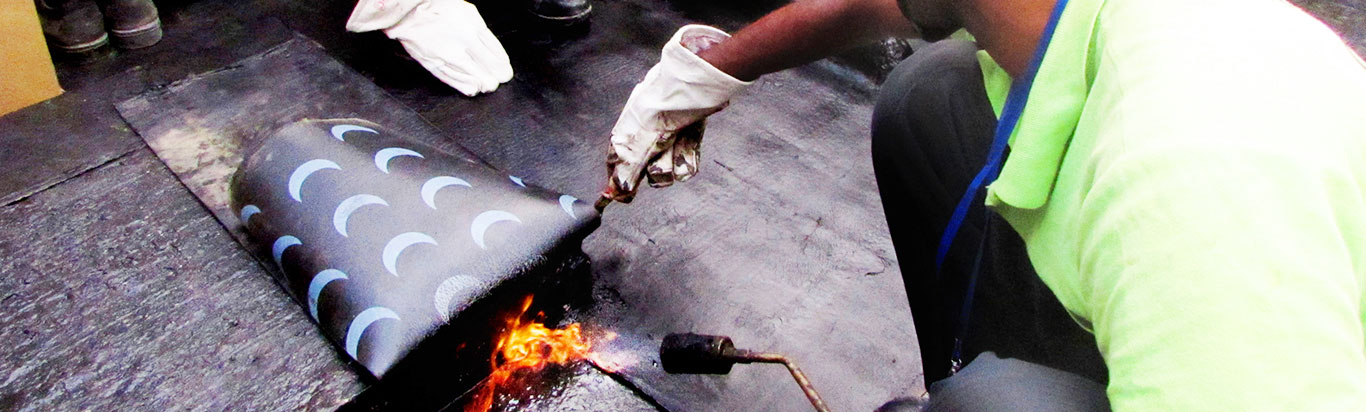
Membrane waterproofing is applied to the exterior face of a structure. It can go above, below or at grade on surfaces exposed to weather and surrounding soil. It is available as a fluid-applied membrane, sheet membrane, or hydrous clay and vapour barriers.
Membranes form a continuous, seamless layer that keeps water away from the concrete itself. They are the go-to choice for large roofs, podiums, basements and foundation walls.
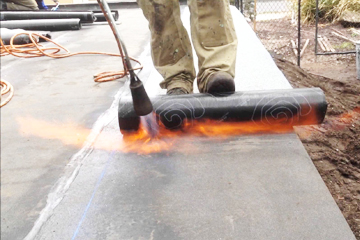
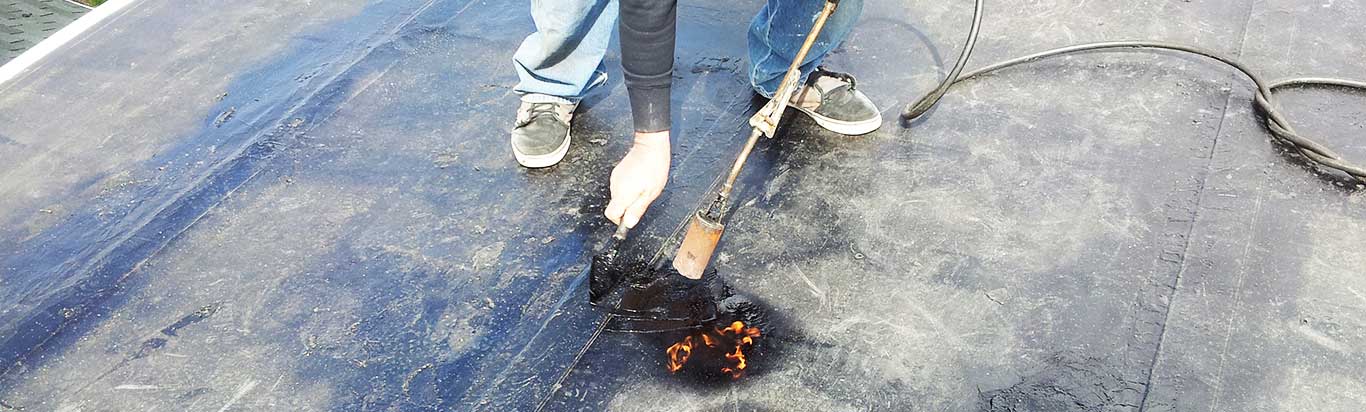
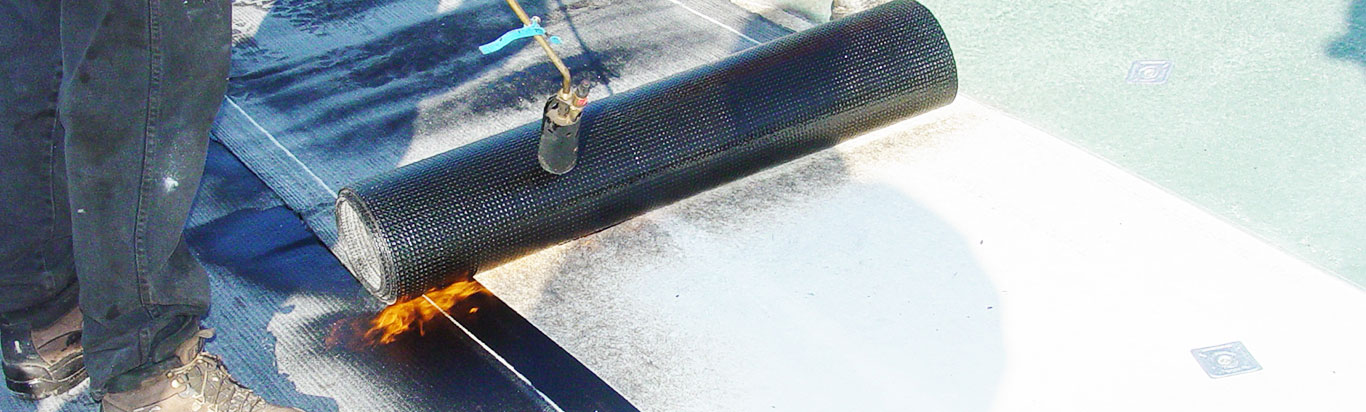
We install APP and SBS torch-on membranes, self-adhesive sheets and fluid-applied polyurethane membranes, with careful detailing at laps, upstands and penetrations, where most failures start.
- Typical torch-on sheet thickness
- 4mm
- Lap joints sealed and checked
- 100%
- Seamless fluid-applied option
- ∞
How the job runs.
Step 1
Substrate prep
Grinding, cleaning and priming for full adhesion.
Step 2
Detailing
Fillets, upstands and pipe collars treated first.
Step 3
Lay membrane
Torch-on or fluid membrane with overlapped, sealed joints.
Step 4
Protect
Screed or protection board so the membrane stays intact.
From our sites
Membrane Waterproofing by BCR
Questions, answered.
Sheet or liquid membrane, which is better?+
Sheets give consistent thickness over large flat areas. Liquid membranes are better for complex shapes with many penetrations. We often combine both on the same project.


Got a leak? Let's find the source.
Free site inspections across Chennai. Projects elsewhere in Tamil Nadu on request.